Large-sample hydrology
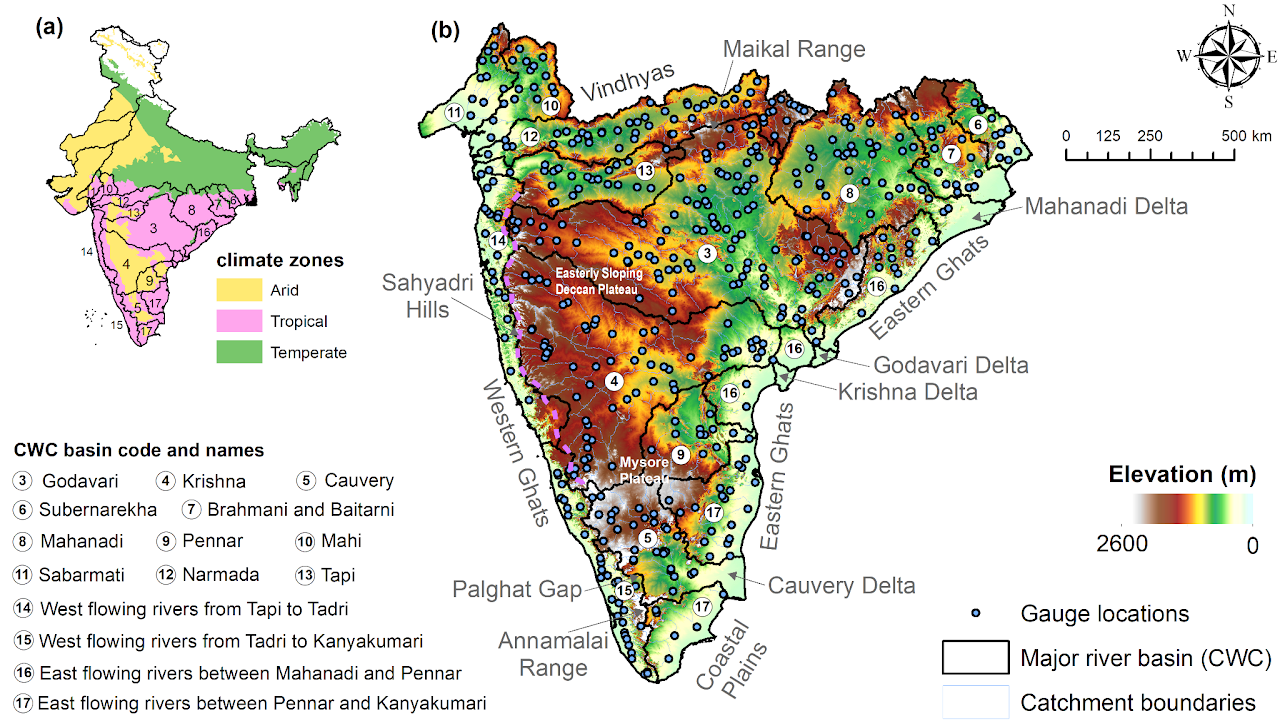
Rather than studying single basins in isolation, we build and analyse datasets spanning hundreds of catchments. This large-sample view reveals which hydrological behaviours generalise, which are regional, and where models succeed or fail. Our CAMELS-IND dataset brings 472 Indian catchments into this global effort.
Process-based & data-driven modeling
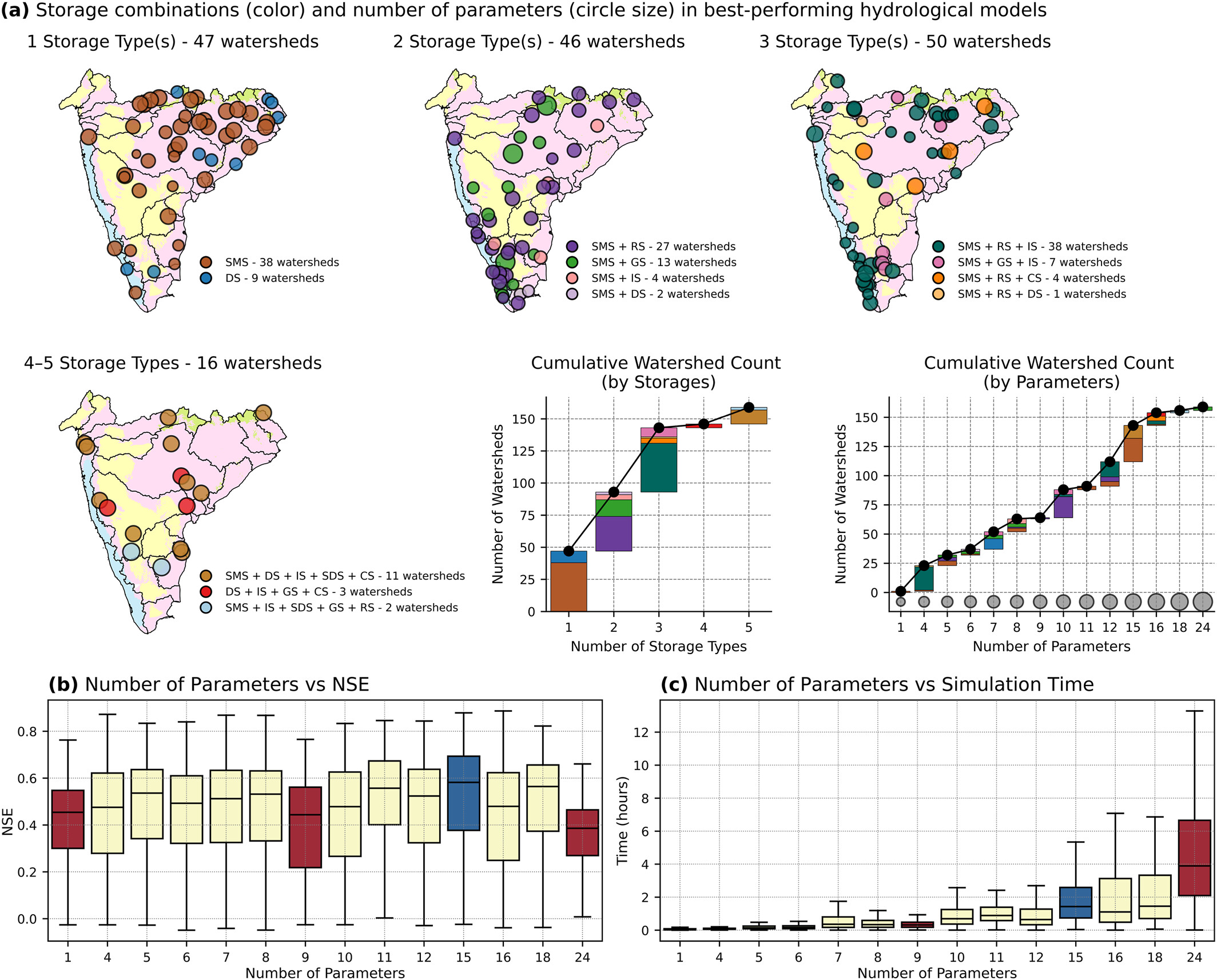
We develop physics-informed and deep learning models — LSTMs, Transformers, and differentiable hybrid models that embed hydrological structure into neural networks. The goal is prediction that is both accurate and physically interpretable, including in ungauged and data-scarce basins.
Water Resources Research (2025) ↗
Climate change & hydroclimatic extremes
We study compound hydro-climatic extremes, regional flood frequency, and how the statistics of floods and droughts shift under climate change — with particular attention to data-scarce mountain environments where hazards are rising. Key areas of focus include:
- Numerical and Data-Driven Hydrodynamic Modeling
- Extreme Event Quantile Regression and Prediction
- Identifying Hazards and Vulnerable Factors for Hydroclimatic Risks
- Assessing Climate Change Impacts on Hydroclimatic Extremes
Terrestrial ecohydrology & ecosystems
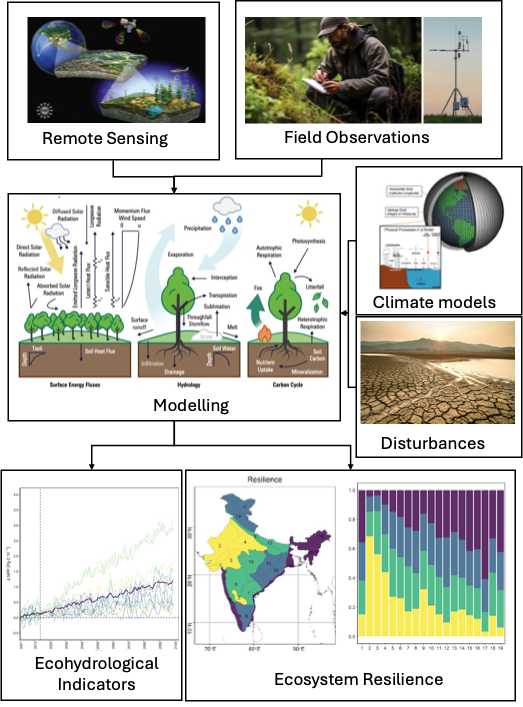
Our research focuses on understanding the dynamic interactions between terrestrial ecosystems and hydrological processes across various spatial and temporal scales. By exploring the role of vegetation in water cycling, soil moisture's influence on plant growth, and how land cover changes impact water availability, we aim to bridge the gap between ecological and hydrological sciences. By linking ecosystem processes to hydrological functions, our research provides critical insights for improving ecosystem sustainability and resilience under future environmental scenarios. Key areas of our work include:
- Vegetation-Water Interaction
- Ecosystem Resilience to droughts and forest fires
Water Accounting & Nexus Approach
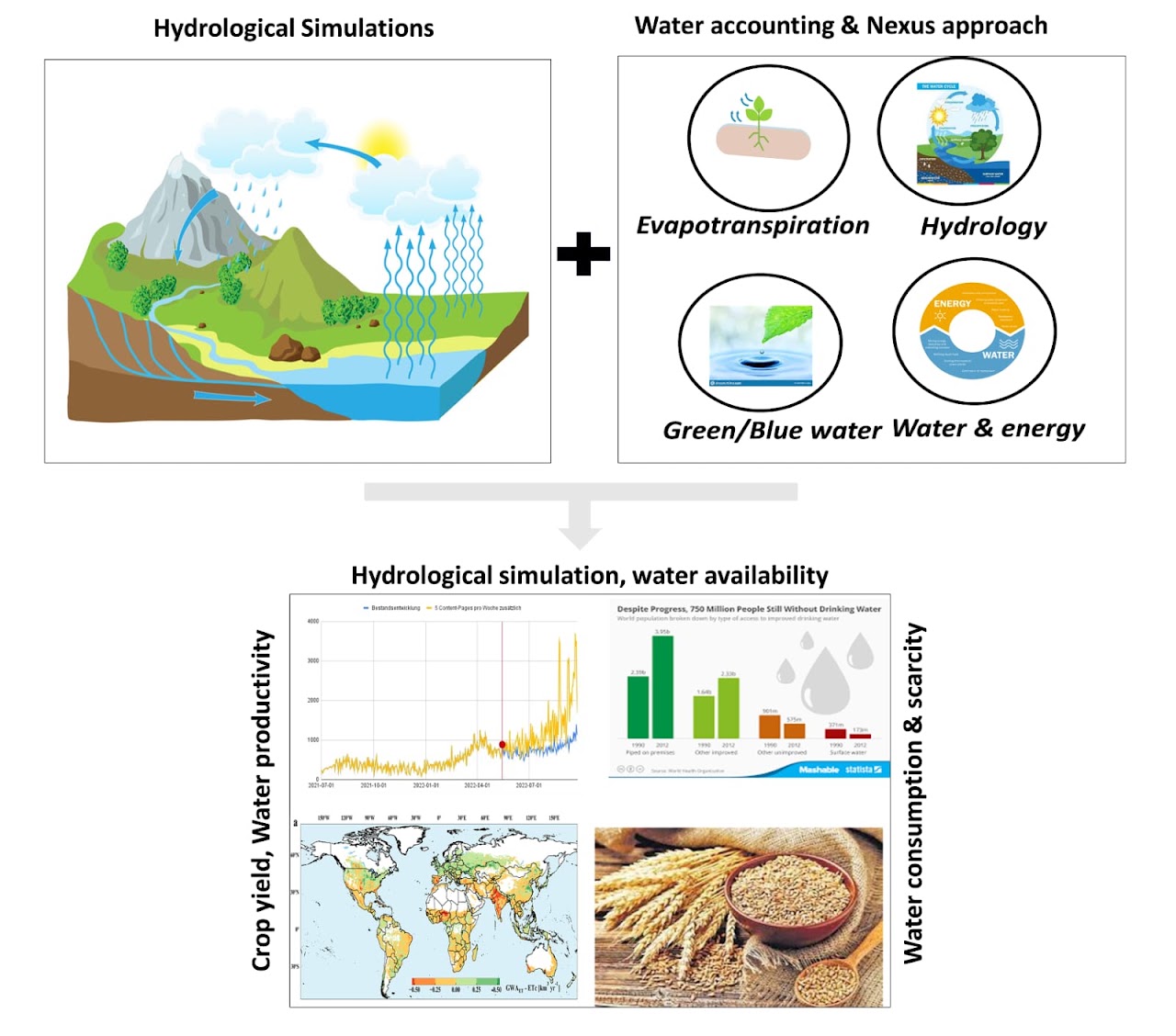
Our research integrates the Water Accounting (WA) framework and Nexus Approach to provide a comprehensive understanding of water resource management across complex river basins. By leveraging diverse datasets, we quantify key hydrological processes at multiple scales, focusing on water inflows, outflows, consumption, withdrawals, and storage variations. Key elements of our research include:
- Water Accounting for Basin-Wide Hydrological Processes
- Quantifying Water Resource Performance
- Water-Energy-Food-Ecosystem Nexus
Journal of Water Resources Planning and Management(2024)↗