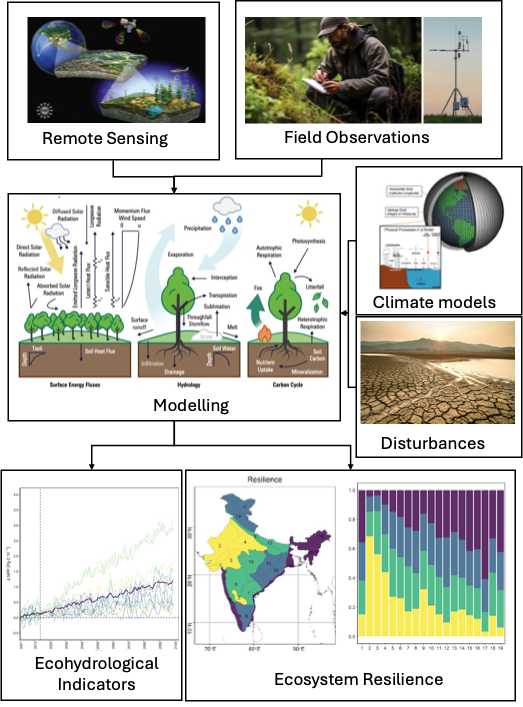
EcoHydroLab studies multiscale ecohydrological processes, interactions and disturbances — combining field studies, remote sensing and advanced modeling to inform sustainable water management.
We work across scales — from plot-level ecohydrology to continental large-sample datasets — bridging process understanding and data-driven prediction.
Building and using continental catchment datasets to learn general hydrological behaviour across hundreds of basins.
Physics-informed and deep learning models (LSTM, Transformers, differentiable hybrids) for streamflow and beyond.
Compound hydro-climatic extremes, flood frequency, and impacts under a changing climate.
Vegetation–water–carbon interactions, ecohydrological indicators and ecosystem response.
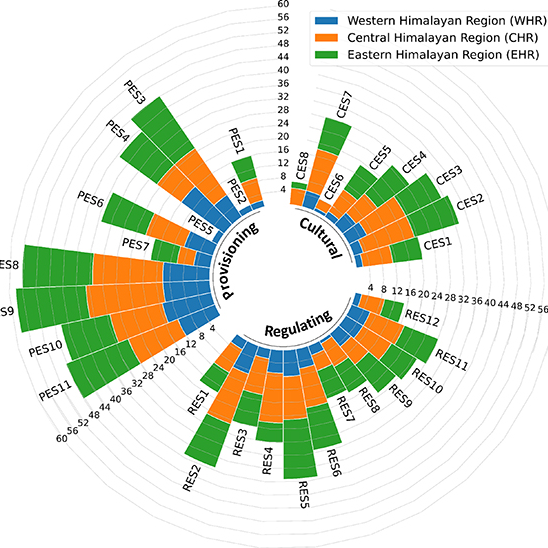
Quantifying and mapping ecosystem services, with a focus on the Himalayas.
Water accounting frameworks and the water–energy–food nexus for resource management.
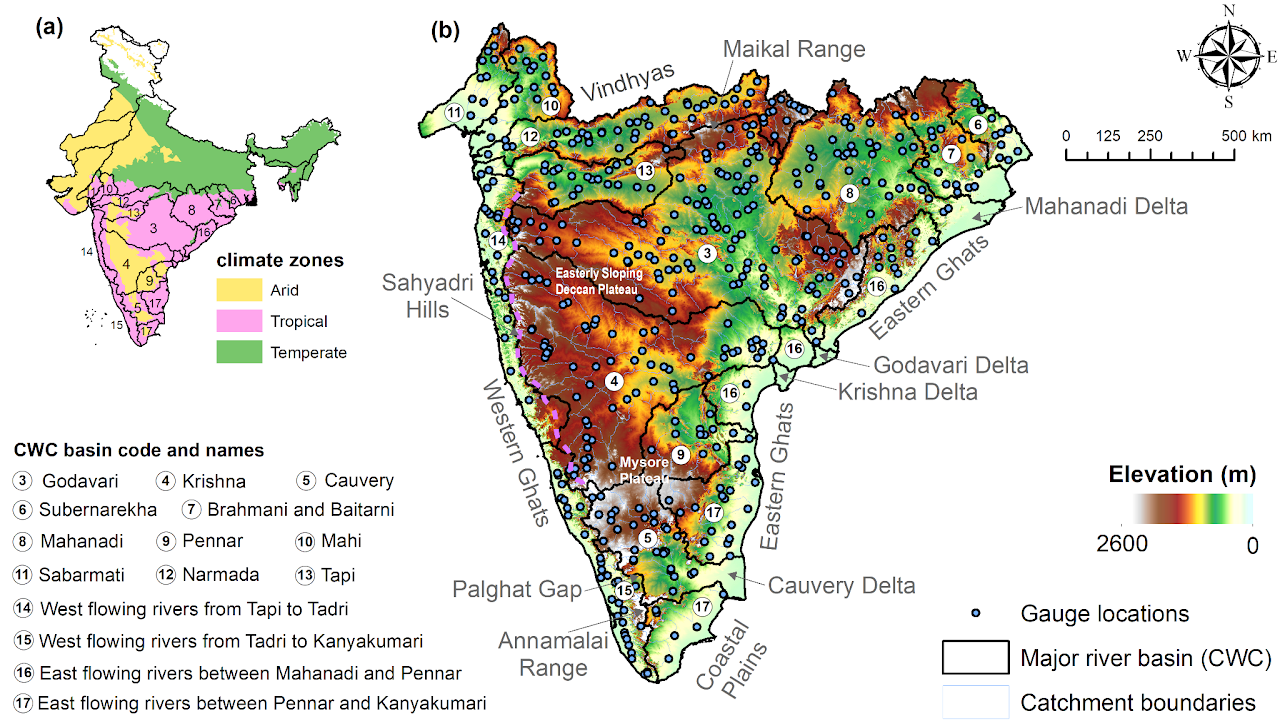
Catchment Attributes and Meteorology for Large-sample Studies – India. Daily meteorological time series, observed and LSTM-predicted streamflow, and static catchment attributes — built to bring Indian catchments into global hydrological research.
Deep learning models that predict streamflow even in watersheds with aggregated and intermittent observations — extending data-driven hydrology to data-scarce settings.
Water Resources Research (2025) ↗
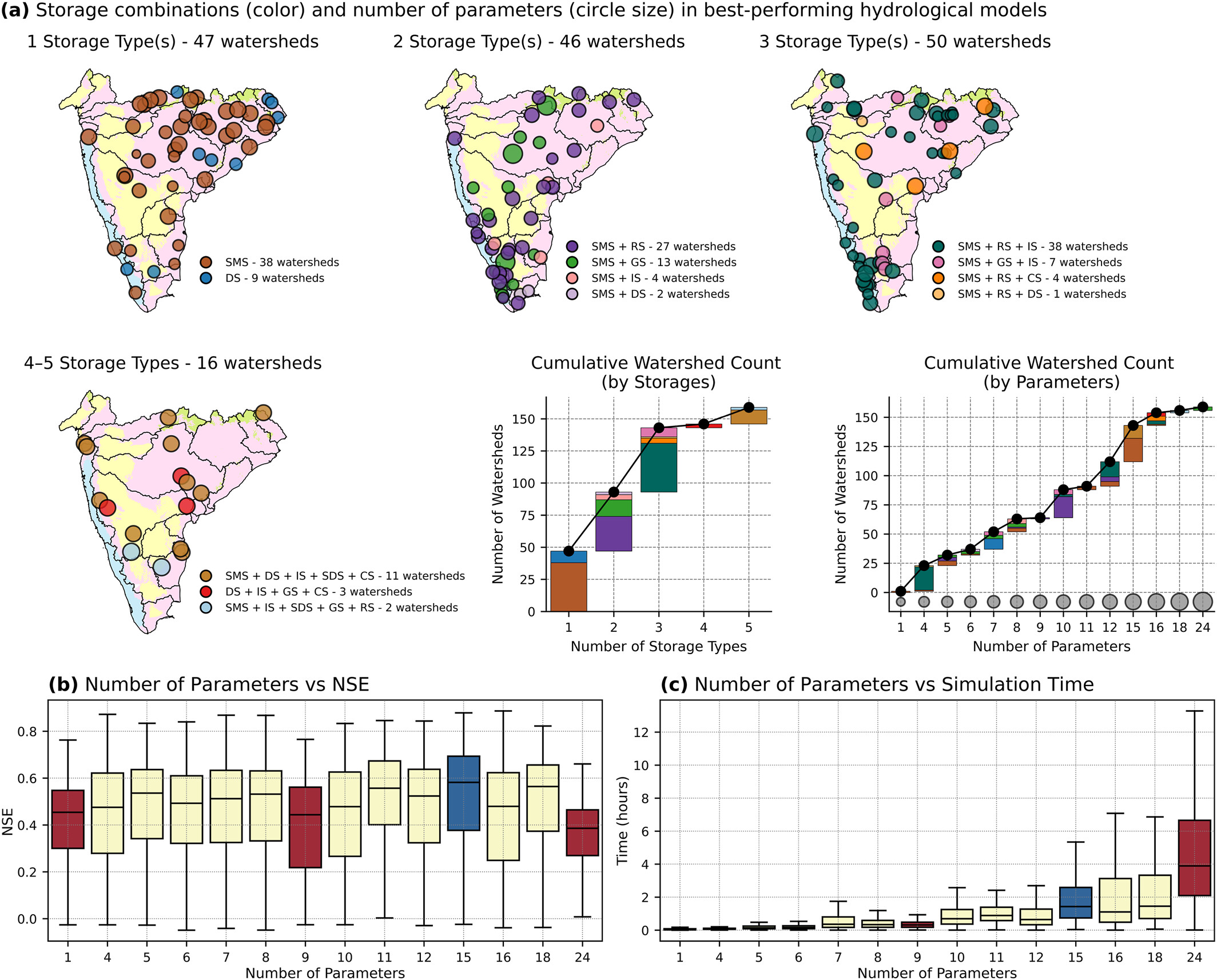
Benchmarking and Selecting Optimal Hydrological Models for Large-Sample Applications Considering Complexity and Uncertainty.
Water Resources Research (2026) ↗
Does MC-LSTM model improve the reliability of streamflow prediction in human-influenced watersheds?
Integrating Reservoir Dynamics Into Differentiable Process-Based Hydrological Model for Enhanced Streamflow Estimation.
Quantifying how mountain ecosystem services respond to climate change, supporting conservation and management decisions in fragile high-mountain environments.
Environmental Research Letters (2025) ↗
APN-funded REFRESH project at IIT Roorkee - REgional cooperation for FReshwater Ecosystem Services in Himalayas (REFRESH): Understanding the influences of monsoon variability and compound extremes.
Assessing how India's vegetation carbon uptake shifts under future climate — linking ecohydrology to the carbon cycle at national scale.
Science of the Total Environment (2024) ↗
Increasing Cumulative Impacts of Droughts Under Climate Change Does Not Alter the Ecosystem Resilience in India.
Agricultural catchments exhibit enhanced climate and drought resilience compared to forested catchments in Peninsular India.
We welcome motivated students and researchers interested in hydrology, ecohydrology, machine learning and climate. See current opportunities and how to apply.